
10 Laser Marking Machine Benefits That Are Transforming Modern Manufacturing
In an era where product traceability, brand protection, and manufacturing precision define competitive advantage, laser marking has emerged as the gold standard for permanent identification. Whether you operate a small metal fabrication shop or a multi-billion-dollar automotive production line, understanding the full scope of laser marking machine benefits can reshape how you think about product labeling forever.
If you are also interested in how factories catch defects automatically, I wrote about how machine vision cameras spot flaws humans miss — the two technologies work together more than people realize.
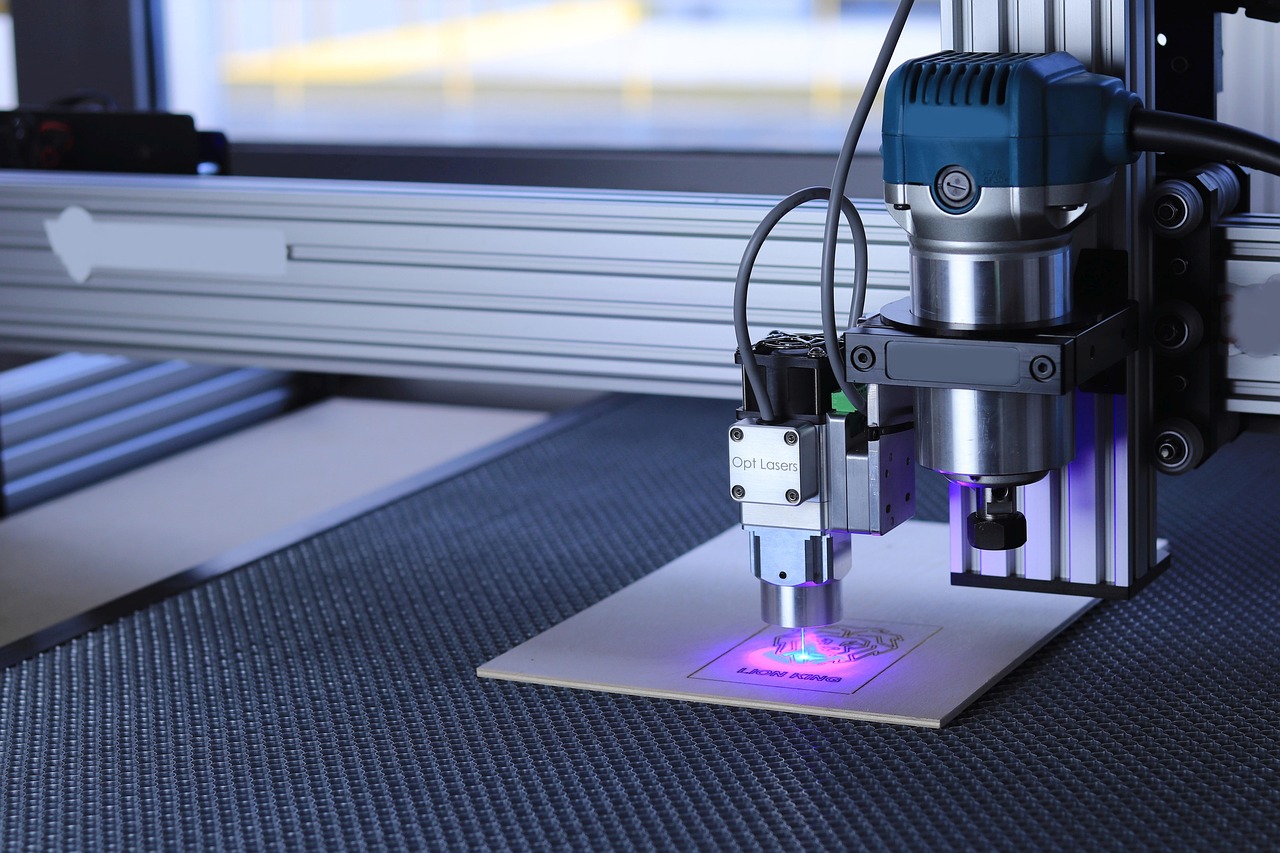
Unlike traditional methods that rely on ink, labels, or mechanical engraving, laser marking uses a focused beam of light to alter the surface of a material. The result is a permanent, high-contrast mark that survives heat, chemicals, abrasion, and time. But permanence is only the beginning. Below, we break down the ten most impactful laser engraving advantages driving adoption across aerospace, medical devices, electronics, automotive, and consumer goods industries.
Another standout among laser marking machine benefits is material flexibility. With the right laser type, you can mark:
- Metals: steel, aluminum, brass, copper, titanium, plated surfaces
- Plastics: ABS, polycarbonate, PEEK, nylon, and engineering polymers
- Coated materials: anodized aluminum, painted surfaces, powder-coated finishes
- Organics: leather, wood, paper, and some ceramics
- Glass and semiconductors: with specialized UV or green laser sources
By switching wavelength and power settings, a single laser workstation can handle mixed-material production lines without hardware changes. That adaptability reduces capital expenditure and floor-space requirements.
6. Environmentally Friendly Manufacturing
Sustainability is no longer a marketing slogan — it is a procurement filter. Large OEMs now score suppliers on environmental impact. Laser marking earns high marks because it produces no VOCs, no ink waste, no solvent runoff, and no disposable substrates.
A factory that replaces chemical etching or ink-based labeling with laser marking often eliminates an entire hazardous-waste stream. For companies pursuing ISO 14001 or carbon-neutral pledges, this shift is both a cost saver and a brand asset.
7. Superior Counterfeit Protection and Brand Security
Counterfeiting costs the global economy over $500 billion annually. Labels can be peeled and reapplied. Ink can be scraped and reprinted. Mechanical marks can be ground away.
Laser marks cannot be duplicated without the original source file and the exact machine parameters — power, speed, hatch pattern, and focal distance. Advanced systems add additional security layers: micro-text invisible to the naked eye, geometric patterns that change appearance under specific lighting, and even hidden marks detectable only by machine vision. For high-value goods like pharmaceuticals, luxury items, and critical aerospace components, this tamper-evidence is priceless.
8. Deep Software Integration and Traceability
Modern industrial laser marking controllers are essentially networked computers. They accept data from ERP systems, MES platforms, barcode scanners, and vision systems in real time. A part arriving at the laser station can carry a unique identifier generated by the factory database, and the laser can mark that exact string, date code, or QR code without human intervention.
This integration is the backbone of Industry 4.0 traceability. Every mark becomes a data point. Every scan downstream confirms chain-of-custody. When a recall occurs, manufacturers can pinpoint affected batches in minutes rather than weeks.
9. No Surface Preparation or Post-Processing
Chemical etching requires degreasing, masking, and neutralization. Pad printing needs primers on tricky substrates. Inkjet often demands pre-treatment or drying tunnels.
Laser marking needs none of that. A raw metal casting fresh from the CNC machine can move directly to the laser station. A molded plastic housing can be marked seconds after ejection. The mark is dry, smudge-proof, and ready for packaging immediately. That elimination of prep and post-processing steps compresses cycle time and reduces work-in-progress inventory.
10. Long-Term Cost Reduction and ROI
The upfront capital cost of a laser marking system is higher than a basic inkjet printer. But the total cost of ownership tells a different story. When you factor in eliminated consumables, reduced downtime, lower maintenance labor, fewer rework events, and avoided recall costs, the payback period for a laser marker typically falls between 12 and 24 months in mid-volume production.
For high-volume operations running three shifts, the savings accelerate. One automotive supplier reported a 40% reduction in marking-station operating costs within 18 months of switching from dot-peen to fiber laser. That is not a marginal improvement — it is a structural cost reset.
Laser Marking vs Traditional Marking: The Decisive Shift
Comparing laser marking vs traditional marking side by side makes the decision clear:
- Medical Devices: UDI compliance, sterilization survival, biocompatible surface alteration
- Automotive: Traceability for powertrain and safety-critical parts
- Aerospace: AS9100-compliant component identification that survives extreme environments
- Electronics: PCB serialization, component branding, and anti-counterfeit marking
- Firearms and Defense: ATF-compliant serial engraving on hardened steel
- Jewelry and Luxury Goods: Subtle, high-resolution logos and authenticity certification
Final Thoughts
Laser marking is not merely an upgrade to existing labeling methods. It is a fundamental shift in how manufacturers think about product identity, traceability, and brand protection. The combination of permanence, precision, speed, material flexibility, and software integration makes it one of the highest-ROI investments available on the factory floor today.
If you are still relying on ink, stickers, or mechanical engraving for critical identification, you are carrying hidden costs — consumables, downtime, rework, and recall risk — that compound every quarter. The move to laser marking is not about chasing technology for its own sake. It is about eliminating failure modes that cheaper methods simply cannot prevent.
Recommended next step: Audit your current marking stations for annual consumable spend, downtime events, and rework rates. Then request a trial mark from a laser supplier using your actual parts. Seeing your own components marked with micron precision and zero consumables is the fastest way to build internal support for the switch.
Want the full technical background on how laser marking actually works? Wikipedia’s laser marking article breaks down the physics — heat, ablation, and why some metals mark better than others.
The one thing I wish someone had told me before I bought my first machine: not every material marks the same way. I assumed stainless steel and aluminum were basically the same. They are not. Aluminum reflects laser light like a mirror, which means you need different power settings, different speeds, and sometimes a different wavelength entirely. I burned through three test pieces before a technician from the supplier finally looked at my settings and laughed. “You are trying to engrave a mirror,” he said. That was a $200 lesson in humility.
Since then, I have learned that fiber lasers handle metals beautifully, CO2 lasers excel at organics like wood and leather, and UV lasers are what you want for sensitive plastics that discolor under heat. Most first-time buyers do not know this distinction exists. I certainly did not. The marketing brochures all show the same sleek machine doing everything flawlessly. In reality, choosing the wrong laser type for your material is like buying a sports car to haul lumber. It might work, but it will cost you.
I have also stopped trusting “one-click setup” promises. Every factory floor is different. Humidity, dust, vibration, and even the angle of overhead lighting affects how a marking system performs. The best installers I have worked with spend more time observing your environment than they do unboxing the machine. That is why the cheapest quote is rarely the best quote. A $15,000 machine installed by someone who asks the right questions will outperform a $25,000 machine dropped in by someone who does not.
If you are considering laser marking for your operation, my honest advice is this: start with a rental or lease program if your vendor offers one. Run it on your actual parts, in your actual environment, with your actual operators. The data you get from three months of real use is worth more than every brochure and demo video combined. That is how I ended up with the machine I use today — not because it had the best best specs on paper, but because it was the only one that survived our Tuesday afternoon shift change without needing recalibration.
Pick one idea from this article. Just one. Maybe it is testing permanence with a belt sander. Maybe it is asking your vendor about fiber versus CO2. Maybe it is running a rental before you commit. Whatever it is, try it on a real part this week. Laser marking is not magic. It is just physics, done precisely. And precision is something you can learn.
If you are curious about how robotics ties into modern marking workflows, I covered that in our piece on CNC robotics trends. For a deeper technical dive into laser sources and beam guidance, the engineers at TRUMPF publish resources that I still reference when troubleshooting power settings.
Frequently Asked Questions
Cheapest laser marking machine for small shop?
A 20-watt fiber laser from a reputable Chinese manufacturer runs about $3,500–$5,000. I started with one. It handled stainless steel, aluminum, and mild steel without issues. The catch? You will need to learn the software yourself, and the documentation is usually translated badly. Budget another $500 for someone patient to teach you the settings.
Laser marking vs engraving — difference?
Marking changes the surface color without removing material. Engraving actually removes material, creating depth. Marking is faster and leaves the surface smooth. Engraving is deeper and more tactile. For traceability codes, marking is usually enough. For artistic or deep impressions, you want engraving. I use marking for 90% of what I do.
How long does laser marking last?
Properly done on metal, it lasts forever. I have marks on tools from 2019 that look identical today. The only way to remove them is to grind down past the mark. On plastics, it depends on UV exposure — some fade slightly after years in direct sunlight. On anodized aluminum, it can last decades if the anodizing itself holds up.
Can you laser mark curved surfaces?
Yes, but you need a rotary attachment or a 3D galvanometer head. Flat marking is what most budget machines do. Curved marking adds $2,000–$8,000 to the price depending on the system. I do not own one yet. For cylinders, I use a simple rotary jig that spins the part manually. It is slow but it works.
Is laser marking safe for operators?
With proper enclosure and safety glasses, yes. Without them, absolutely not. The beam can blind you permanently in microseconds. I wear the included safety glasses even when the machine is supposedly off. I have seen too many machinists get casual around equipment. Do not be one of them.
One last thing: laser marking is not a “set it and forget it” operation. I check my marks every Monday morning with a loupe and a bright desk lamp. It takes five minutes. In two years, that habit has caught three alignment drifts before they became customer complaints. The people who skip this step are the ones who end up with entire batches rejected. Small discipline, big protection. That is the real benefit nobody puts in the brochure.
How to choose the right laser power?
Start with 20 watts for metals under 3 mm thickness. For deeper engraving or thicker materials, 30 to 50 watts gives you more speed and depth without maxing out the laser tube. I run a 30-watt fiber laser and rarely push it past 70% power. Higher wattage extends the range, but it does not replace skill.
Post-marking inspection depends on camera quality. See our machine vision sensor guide to spec the right CMOS chip for your line.