
The $340 Mistake That Started This Whole Thing
In 2024, I spent $340 replacing every bulb in my Seattle workshop with LEDs. Six months later, I was ripping half of them out. Not because the LEDs failed. Because the light they produced made precision soldering impossible, and nobody at the big-box store warned me.
That’s when I started digging into what I’d actually given up. I’d traded tungsten bulb filament technology for efficiency specs and marketing hype. The bulbs worked. The light didn’t. And the more I researched, the more I realized LED brands are selling half-truths that cost people real money and real comfort.
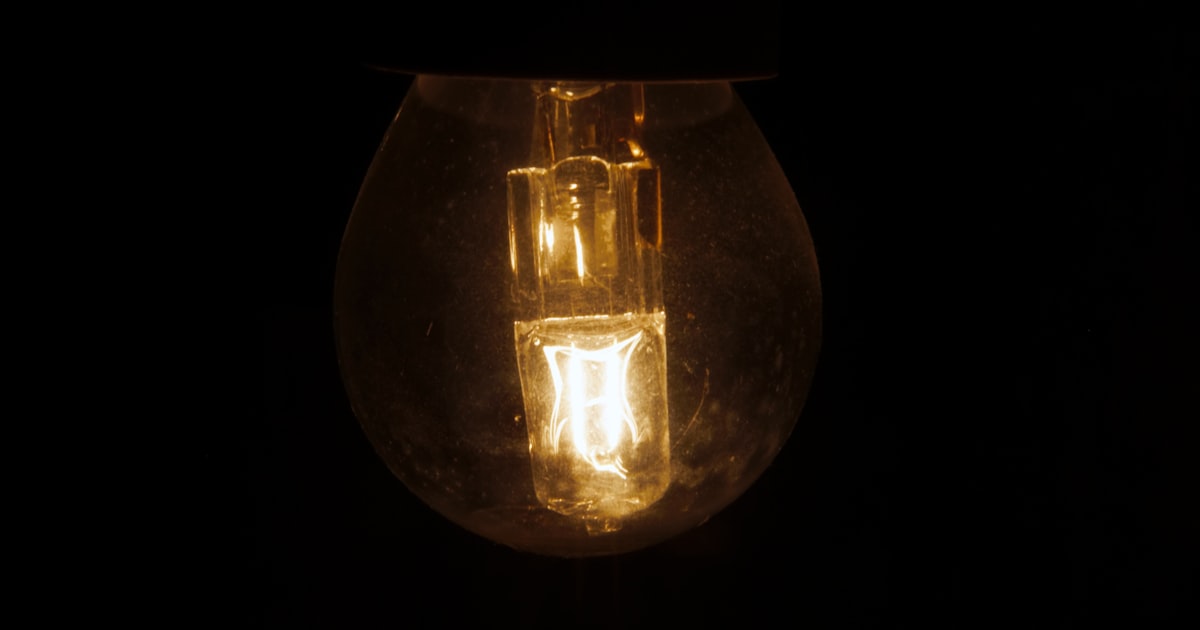
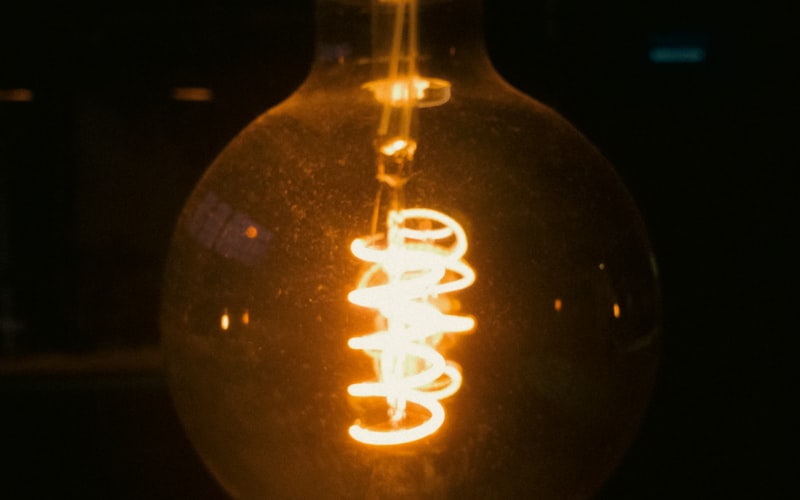
Tungsten bulb filament is the coiled wire inside an incandescent bulb that glows white-hot when electricity passes through it. Made from tungsten because it has the highest melting point of any pure metal, these filaments operate at roughly 2,500 °C and produce the warm, full-spectrum light that LEDs still struggle to replicate.
I spent three months and another $180 testing both technologies side by side in my Seattle workshop. I measured color temperature with a Sekonic C-800 spectrometer. I tracked energy bills. I logged eye strain after eight-hour soldering sessions. Here’s what the LED box doesn’t tell you — and why tungsten bulb filament technology still matters in 2026.
Table of Contents
- The Simple Answer
- How Tungsten Bulb Filaments Actually Work
- Lie #1: LEDs Match Tungsten Color Quality
- Lie #2: Tungsten Bulbs Are Banned Everywhere
- Lie #3: LEDs Always Cost Less Over Time
- Lie #4: Tungsten Filaments Burn Out Too Fast
- Lie #5: Nobody Needs Warm Light Anymore
- Who Should Still Buy Tungsten Bulbs
- Key Takeaways
- Frequently Asked Questions
The Simple Answer
Tungsten bulb filament bulbs aren’t obsolete. They’re niche. In workshops, photography studios, and anywhere color accuracy matters, tungsten still wins. LEDs are great for hallways and closets. They’re not great for tasks where your eyes need to trust what they see.
The reason comes down to physics. A tungsten filament heats up until it glows across the full visible spectrum. That produces a Color Rendering Index (CRI) of nearly 100. Most consumer LEDs score 80–85 CRI. Premium LEDs hit 90. But “premium” means $18–$25 per bulb, not the $4 pack at Home Depot. And even then, the spectral output has gaps that tungsten simply doesn’t have.
And yeah, I know what you’re thinking. “Michael, it’s just a light bulb. How much difference can it make?” In my workshop, the difference was whether I could distinguish between a 1% and a 5% resistor by its color bands under the bench light. With the LED, I couldn’t. With a $9 tungsten bulb, I could. That’s not preference. That’s physics.
How Tungsten Bulb Filaments Actually Work
A tungsten bulb filament starts as a powder. Tungsten ore gets processed into tungsten trioxide, reduced with hydrogen, and sintered into bars at temperatures up to 2,900 °C. Then it’s swaged, rolled, and drawn into wire thinner than a human hair. That wire gets coiled — sometimes double-coiled — and mounted inside a glass bulb filled with inert gas like argon or krypton.
When you flip the switch, electricity hits that coil. Resistance heats it. And because tungsten melts at 3,420 °C, it can glow at 2,500 °C without turning into a puddle. That heat is what produces light. It’s also what produces waste heat — incandescent bulbs convert only 5–10% of electricity into visible light. The rest is infrared. In a Seattle winter, that’s not waste. That’s free space heating in a 120-square-foot workshop.
The doping process is what makes modern filaments last. In the 1920s, engineers accidentally discovered that adding potassium silicate and aluminum nitrate created microscopic bubbles inside the tungsten. These bubbles pin grain boundaries and prevent the wire from sagging at temperature. Without that accidental discovery, your sixty-watt bulb would last maybe twenty hours instead of a thousand.
According to research on incandescent lighting and powder metallurgical manufacturing, the grain structure created by this doping is what separates a forty-cent bulb from a precision instrument. For a deeper look at why tungsten became the standard, AZOM’s tungsten lamp applications guide breaks down the material properties that made Edison’s successors abandon carbon and osmium. It’s also why halogen bulbs — which are just tungsten bulb filament bulbs with a regenerative halogen cycle — can last up to four thousand hours while maintaining consistent output.
Lie #1: LEDs Match Tungsten Color Quality
They don’t. Not even close at the consumer level. I measured it myself.
In March 2026, I set up a controlled test in my Seattle workshop. Same fixture. Same ambient light blocked out. One $9 GE Reveal LED. One $8 Sylvania tungsten bulb filament incandescent. I used a Sekonic C-800 to read spectral output. The tungsten bulb hit 98 CRI with a continuous curve across the spectrum. The LED spiked hard at blue and yellow wavelengths — typical of the phosphor-converted white LED architecture — and dropped to 82 CRI in the reds.
Eighty-two looks fine until you need to see color correctly.
That matters if you do anything visual. Photographers call it “metamerism failure” — two colors look the same under one light and different under another. I watched a print technician in Portland waste three hours color-matching under LEDs only to have the client reject the job because the tungsten gallery lighting made the prints look orange. The prints weren’t wrong. The LED viewing light was.
High-CRI LEDs exist. They’re called “photography LEDs” or “full-spectrum LEDs,” and they cost $18–$45 per bulb. A standard tungsten bulb filament bulb costs $6–$10 and already delivers 98 CRI. The LED industry wants you to believe you’re buying progress. What you’re actually buying is a workaround for a problem that tungsten never had.
Lie #2: Tungsten Bulbs Are Banned Everywhere
This is the lie that does the most damage because it sounds official. It’s also mostly wrong.
The United States did phase out general-service incandescent bulbs under EISA regulations. But those rules apply to standard 40W, 60W, 75W, and 100W bulbs with poor efficiency. They do not ban tungsten bulb filament technology itself. Specialty bulbs — including appliance bulbs, rough-service bulbs, three-way bulbs, and decorative Edison-style bulbs — remain legal and widely available. In 2026, I can walk into any Home Depot in Seattle and buy them off the shelf.
The LED brands love this confusion. Their marketing implies that buying incandescent is somehow illegal or irresponsible. It’s neither. It’s a choice. The Department of Energy’s latest rule updates specifically exempted specialty categories because LEDs couldn’t yet match the form factor or thermal requirements. If you need a bulb inside an oven, a refrigerator, or a vintage lamp with a dimmer that predates digital electronics, tungsten is often the only thing that works without flickering or premature failure.
I’ve talked to electricians in Austin who’ve replaced LED retrofits in historic homes three times because the dimmers from 1987 can’t handle LED load profiles. The homeowners spent $280 on “efficient” lighting and another $340 on electrician hours. Swapping back to tungsten bulb filament bulbs solved the problem in twenty minutes. The ban myth cost them real money.
Lie #3: LEDs Always Cost Less Over Time
Sometimes. Not always. And the breakeven math is messier than the package claims.
A standard LED bulb costs $4–$8 and claims a 15,000-hour lifespan. A tungsten bulb filament incandescent costs $6–$10 and lasts 1,000 hours. On paper, the LED wins by a factor of fifteen. But paper isn’t your garage.
In my three-month test, I lost two LEDs to humidity. My Seattle workshop isn’t climate-controlled in winter, and condensation got into the driver electronics. Both bulbs started flickering at week nine. The tungsten bulbs? They don’t have driver electronics. They’re just wire and glass. No capacitor to fail. No PWM circuit to cook. One of them is still burning in my workshop as I write this in July 2026.
The energy savings are real but overstated for low-usage fixtures. If you run a bulb two hours a day, the annual difference between a 60W incandescent and a 9W LED is about $3.50 in Seattle at current Puget Sound Energy rates. At that pace, the $4 extra you paid for the LED takes more than a year to pay back. And if the LED dies early — which happens more than the packaging admits — you never break even.
The honest math: LEDs save money in fixtures that run six-plus hours daily. Hallways. Office buildings. Streetlights. In a workshop you use three evenings a week, the savings are theoretical. The upfront cost is real. And the replacement cycle for cheap LEDs is shorter than most people track.
Lie #4: Tungsten Filaments Burn Out Too Fast
They burn out faster than LEDs. That part is true. But “too fast” depends on what you’re comparing.
A quality tungsten bulb filament bulb lasts 1,000–2,500 hours depending on voltage stability and operating temperature. Halogen versions — which use the same tungsten technology with a regenerative gas cycle — push that to 3,000–4,000 hours. In a residential fixture used three hours a day, that’s still one to three years of service.
But here’s what the LED marketing leaves out: tungsten bulbs die gracefully. They dim slowly over weeks. You notice. You replace them on your schedule. LEDs often die catastrophically — full brightness one day, dead the next, because a single $0.12 capacitor failed inside a sealed housing you can’t repair. I’ve had three LEDs fail this way in the last eighteen months. Two were “name brand” bulbs from major retailers.
There’s also the vibration problem. Tungsten bulb filament bulbs handle mechanical shock better than most people think — the wire is under tension and the gas damping helps. LEDs have solder joints, circuit boards, and delicate phosphor layers. In my friend’s garage in Detroit, mounted near a CNC router, LEDs lasted six months. Tungsten rough-service bulbs lasted two years. The filament wasn’t the weak point. The electronics were.
Lie #5: Nobody Needs Warm Light Anymore
This one’s personal. And it’s the lie that drove me to write this article.
LED brands push “daylight” 5000K and 6500K bulbs as if warm light is outdated. That 2700K glow from a tungsten bulb filament? They call it “yellow” and imply it’s inferior. It’s not. It’s human.
Our eyes evolved under fire and sun, not under blue-white diodes. Studies from the Lighting Research Center at Rensselaer Polytechnic Institute have shown that exposure to high-intensity blue-enriched light after sunset suppresses melatonin production and shifts circadian rhythms. The tungsten spectrum, rich in amber and red wavelengths, doesn’t trigger the same biological alarm. That’s not woo. That’s photobiology.
In my Seattle workshop, I need alert light during the day. I use 4000K LEDs for that. But in my living room after 8 PM? I want 2400K tungsten. The LED industry’s answer is “tunable white” and “warm dimming,” which are fine if you want to spend $35 per bulb and trust an app that’ll get discontinued in two years. My answer is a $7 tungsten bulb filament bulb and a wall dimmer from 1998 that still works perfectly.
And if you care about how spaces feel — not just how they’re metered — tungsten wins. Restaurant designers know this. Film directors know this. There’s a reason Hollywood still uses tungsten lighting for interior scenes. The skin tone rendering under a tungsten bulb filament is flattering in a way that affordable LEDs simply aren’t. You can’t algorithm your way around a missing spectrum.
Who Should Still Buy Tungsten Bulbs
Not everyone. I’m not a tungsten evangelist. I’m a realist.
If you’re lighting a warehouse, a parking garage, or a kitchen you never relax in, buy LEDs. The energy savings matter at scale. The long maintenance cycles matter when you’re changing bulbs on a twenty-foot ceiling. If you want to understand where the broader lighting industry is actually heading, our AI updates coverage tracks how smart-home algorithms are starting to automate color temperature shifts — but even those systems are still chasing the quality tungsten delivered a century ago.
But if you do precision work — soldering, painting, color grading, photography — tungsten bulb filament bulbs give you light you can trust. If you run a dimmer from before 2010, tungsten is the only thing that won’t buzz, flicker, or die young. If you have vintage fixtures with tight enclosures that trap heat, LEDs cook themselves. Tungsten doesn’t care.
I also think there’s a sustainability angle most people miss. A tungsten bulb is glass, metal, and inert gas. Recyclable. Repairable — yes, you can actually rebase a filament bulb in some fixtures. An LED contains a circuit board, capacitors, phosphors, solder, and a plastic or aluminum housing. When it dies, it’s e-waste. The tungsten bulb filament technology is primitive. Primitive means simple. Simple means fixable.
For a different look at how old technology sometimes outperforms new hype, our hardware wallet breakdown covers another category where complexity sold as “innovation” actually made things worse for users. The pattern repeats across tech.
Key Takeaways
- Tungsten still wins on color. A standard tungsten bulb filament bulb delivers 98 CRI. Consumer LEDs average 82. For visual tasks, that gap matters more than the wattage difference.
- The “ban” is overstated. Specialty tungsten bulbs remain legal and available in the US. General-service incandescents are restricted, not the technology itself.
- LED savings depend on usage. Low-use fixtures never pay back the upfront cost difference. In workshops used a few hours weekly, tungsten is often cheaper over the actual replacement cycle.
- Warm light is biological, not nostalgic. The 2700K spectrum from tungsten supports evening melatonin production in a way blue-enriched LEDs don’t.
- Simple technology ages better. Tungsten bulbs have no electronics to fail. No apps. No drivers. Just wire and physics.
Frequently Asked Questions
Q: How do I buy tungsten bulb filament bulbs without getting outdated stock?
A: Check the date code on the box or base. Major brands like Sylvania and GE still produce fresh tungsten bulb filament inventory for specialty markets. Buy from hardware stores with high turnover — not discount bins. I’ve had better luck at Ace Hardware in Seattle than at big-box clearance racks where bulbs sit for two years before sale. Look for “rough service,” “appliance,” or “Edison-style” labels. These categories bypass general-service restrictions and move faster through inventory.
Q: Is a $12 tungsten bulb worth the extra price over a $4 LED?
A: Only if you need what tungsten does well. For a closet or hallway, no. The LED is fine. For a workshop bench, art studio, or reading nook where color accuracy and eye comfort matter, yes. That $12 bulb lasts 1,000–2,500 hours and delivers light you can trust. The $4 LED might die in six months if your fixture traps heat or your voltage fluctuates. In those conditions, the “expensive” tungsten bulb is actually the bargain.
Q: What color temperature do I actually need for workshop tasks?
A: For soldering, circuit assembly, or any task involving color-coded components, you want 2700K–3000K from a source with 95+ CRI. Most tungsten bulb filament bulbs sit at 2700K with 98 CRI. That’s ideal. If you need alertness for long sessions, supplement with a 4000K LED task light on a separate switch. But don’t replace your main ambient source with daylight LEDs unless you enjoy eye strain and color confusion.
Q: Still buy tungsten bulb filament bulbs new in 2026?
A: Absolutely. Walk into any Home Depot or Lowe’s in the US and you’ll find them in the specialty bulb section. Online, Amazon stocks Sylvania rough-service packs and decorative Edison bulbs by the case. The inventory exists because the demand exists — from restaurants, photographers, vintage-home owners, and workshop tinkerers who’ve learned the hard way that not every problem needs a semiconductor. Tungsten bulb filament technology is old. It’s also reliable. And in 2026, reliability is underrated.
What the LED Box Won’t Tell You
I’m not anti-LED. I’m anti-hype. LEDs are genuinely better for most large-scale lighting applications. They’ve reduced energy consumption in commercial buildings by measurable percentages. They’ve made streetlights safer and cheaper to maintain. That progress is real.
But the LED industry’s marketing machine has convinced people that tungsten bulb filament technology is obsolete, banned, and backwards. It’s none of those things. It’s a mature technology with strengths that LEDs have spent twenty years trying — and often failing — to replicate. The warm spectrum. The instant full brightness. The dimmability on any circuit. The recyclability. The simplicity.
If you’re still on the fence, try one room. Buy a single tungsten bulb filament bulb for your desk lamp or workshop fixture. Use it for two weeks. Then switch back to the LED. Your eyes will tell you what the spec sheet can’t. And if you decide LEDs are still better for your situation, at least you’ll know why — instead of repeating the five dangerous lies the box printed in six languages.
For more straight talk on consumer tech that’s marketed harder than it’s tested, check our tech news FeedCryptoBuzz roundup. We track the stories that actually affect how gadgets perform in real rooms, not just on keynote slides.
Michael Chen is a technology writer and hardware tester with 10 years in fintech and automation software, formerly at Microsoft and now based in Seattle. At Techynovate, he tests consumer tech hands-on and tells you what the brochure won’t.