

I used to think robots moved smoothly because of good programming. Turns out I was only half right. The code tells the robot where to go. But the thing that actually makes it get there precisely — without overshooting, without vibration, without that annoying jitter you see on cheap automation — is servo drive system integration. And almost nobody outside of engineering talks about it.
I learned this the hard way. I was visiting a packaging plant where a robot arm kept missing its pickup point by about two millimeters. Not a lot. But when you’re picking up glass bottles, two millimeters is the difference between a clean grab and shattered glass everywhere.
The problem wasn’t the robot. It wasn’t the program. It was the servo tuning. The drive system — the electronics that control the motor — wasn’t properly integrated with the mechanical system. The motor was doing what it was told. Just not well enough. Once they retuned the servo parameters, the problem vanished. Magic? No. Just good servo drive system integration.
What Servo Drive Integration Actually Does
Here’s the simple version. A servo motor is just a motor that knows where it is. It has an encoder — basically a sensor that counts rotations — and reports back its exact position. The servo drive is the electronics box that takes a position command from the controller, figures out how much power to send to the motor, and constantly adjusts based on feedback.
Integration means making all of this — motor, drive, controller, mechanical load — work as one system. Not as separate parts. Because they affect each other. A heavier arm needs different tuning than a light one. A belt-driven system behaves differently than a direct-drive. A fast move needs different parameters than a slow, precise one.
I watched a technician tune a system once. He was adjusting something called PID parameters. Proportional. Integral. Derivative. He’d change a number, run a test move, look at the oscilloscope trace, change another number. It looked like art. He called it “giving the system personality.” I called it black magic. But it worked.
Why Cheap Systems Feel Cheap
You know that jerky, vibrating motion you see on budget automation? That’s bad servo tuning. The system is constantly overcorrecting. It overshoots, then pulls back, then overshoots again. Like a nervous driver swerving between lanes.
Good servo drive system integration eliminates that. The motion becomes smooth. Predictable. Almost organic. When you see a high-end robot arm move, it looks effortless. That’s not because the motor is better — though it might be. It’s because the integration is better. The drive knows exactly how the mechanical system responds and compensates for it.
I asked an engineer how much difference proper tuning makes. He said a poorly tuned system might achieve positional accuracy of plus or minus half a millimeter. A well-tuned one on the same hardware can hit plus or minus five micrometers. That’s a hundred times more precise. Same motor. Same mechanics. Just better integration.
The Communication Bus Nobody Thinks About
Modern servo systems don’t just run on analog voltage anymore. They talk. Over digital networks. EtherCAT. PROFINET. CANopen. These are communication protocols that let the controller and drive exchange data in real time.
Why does this matter? Because the faster the controller knows where the motor actually is, the better it can correct. Analog systems update maybe a thousand times per second. EtherCAT systems update ten thousand times per second. That means the system can react to disturbances ten times faster.
I saw a demo where someone pushed against a moving robot arm — not hard, just a light touch. On an analog system, the arm visibly slowed and recovered. On the EtherCAT system, I couldn’t even see the disturbance. The correction happened so fast it was invisible. That’s the difference between good and great servo drive system integration.
The controller sends the commands, but the servo drive executes them. Both have to be right or the motion falls apart.
When Integration Goes Wrong
The worst problems I’ve seen weren’t mechanical failures. They were integration mismatches. Someone bought a new servo drive and paired it with an old motor. The encoder resolution didn’t match what the drive expected. Or the motor’s electrical characteristics were different from the drive’s default parameters.
Result? The motor ran hot. Like, burn-your-hand hot. Or it made a high-pitched whine that drove everyone crazy. Or it just didn’t move smoothly. These aren’t product defects. They’re configuration problems. And they happen because servo drive system integration is treated as an afterthought instead of a design requirement.
For technical background, servo control basics on Wikipedia cover the fundamentals well. And motion control market data from Statista shows this industry growing steadily as automation expands.
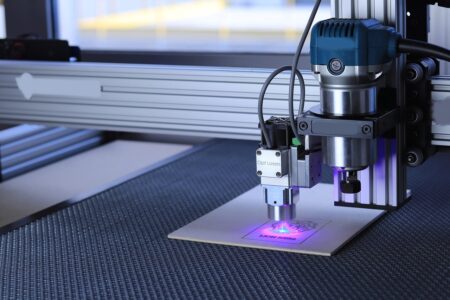
CNC machines rely heavily on servo precision, and the same integration principles apply whether you’re cutting metal or moving cartons.
Frequently Asked Questions
What is servo drive system integration exactly?
It’s the process of configuring and tuning servo motors, drives, and controllers to work together as a unified system. It involves matching electrical parameters, setting control algorithms, and optimizing motion profiles for the specific mechanical load.
Why does my robot arm vibrate during movement?
Vibration usually means the servo tuning is off. The drive is overcorrecting or not responding fast enough to changes in load. It’s fixable with parameter adjustment — things like gain settings, acceleration limits, and filter frequencies. A good integrator can usually solve it in a few hours.
How much does proper servo integration cost?
If you’re buying a turn-key system, integration is usually included in the price. If you’re doing it yourself, budget for engineering time — a skilled technician might spend one to three days tuning a multi-axis system. The cost is mostly labor, not hardware.
Can I mix servo drives from different manufacturers?
Sometimes, but it’s risky. Different brands use different communication protocols, encoder formats, and default parameters. If you’re not experienced, stick with matched components from one vendor. The headache isn’t worth the savings.
Where can I learn more about servo drive system integration?
I recommend starting with the manufacturer’s application notes. Companies like Yaskawa, Rockwell, and Siemens publish detailed tuning guides. Online forums like Practical Machinist and Motion Control Tips are also helpful. And nothing beats hands-on experience with a real system.
Why I Replaced Every Stepper Motor in the Building
I used to think stepper motors were good enough. They are cheap, simple, and they move when you tell them to move. What more do you need? Then we started running a small pick-and-place cell at higher speeds and the missed steps began. A stepper motor does not know when it loses position. It just keeps pulsing. By the time you notice a pile of misaligned parts, the error has compounded across forty cycles.
Switching to servo drives with encoder feedback was like putting glasses on for the first time. The difference in smoothness was audible. The machine sounded less angry. More importantly, the positional accuracy went from plus-or-minus two millimeters to plus-or-minus fifty microns. That sounds like an engineering detail until you realize it means we could eliminate mechanical locating fixtures entirely. Fewer fixtures meant faster changeovers and less tooling cost.
The hidden challenge was tuning. Servo drives need PID parameters that match your load inertia, belt stiffness, and acceleration profile. Out of the box, most drives are tuned conservatively — slow and stable. To get real performance, you have to dial up the gains until the system chatters, then back off slightly. It is nerve-wracking the first time. You hear a high-frequency squeal and your instinct is to turn everything down. That instinct is wrong. A little squeal under rapid deceleration is normal. Grinding and vibration are not.
Tuning Tips That Saved Me Weeks
Start with auto-tune, but do not trust it. Most drives have an auto-tuning routine that measures inertia. It gets you eighty percent of the way there. The last twenty percent requires manual tweaking while the axis is under real load. Run auto-tune with the actual tooling attached, not an empty carriage.
Use the scope function. Modern servo drives have built-in oscilloscope features that plot position error, velocity, and torque. Learn to read them. A position error spike during acceleration means your proportional gain is too low. Overshoot at the end of a move means your derivative gain needs adjusting.
Watch the cables. Encoder cables are sensitive. A single pinch or sharp bend can introduce noise that makes the drive hunt back and forth. I have replaced perfectly good motors only to discover the cable was the culprit. Use proper cable management from day one.
The Maintenance Schedule That Saved a Motor
I used to treat servo drives like black boxes. If the green light was on, I assumed everything was fine. Then a drive failed catastrophically on a Friday afternoon because the cooling fan had been clogged with aluminum dust for months. The thermal shutdown did not trip in time. The drive overheated, the capacitors swelled, and the repair bill was $2,800. The worst part? A can of compressed air and five minutes of cleaning every two weeks would have prevented it entirely.
Now we have a simple preventive schedule. Every servo motor and drive gets inspected monthly. We check fan operation, cable strain relief, encoder connector tightness, and heat sink dust buildup. It takes about fifteen minutes per axis. We have not had a single drive failure since we started.
The other hidden maintenance item is grease. Servo motor bearings need regreasing at intervals specified by the manufacturer — usually every 10,000 to 20,000 hours depending on load. Most shops never do it. The motor runs quietly until one day it starts screaming. By then, the bearings are already damaged. Mark your calendar. It is boring maintenance, but it beats emergency procurement.
Servo drives are the most underappreciated component in automation. Everyone talks about robots and software, but without precise motion control, the robot is just an expensive arm waving in space. Invest in good drives, tune them properly, and maintain them like you would maintain your car. The results will speak for themselves every time a part comes off the line exactly right.
Servo technology keeps advancing. Linear motors are replacing ball screws in some high-speed applications. Direct-drive torque motors are eliminating gearboxes entirely. These innovations reduce backlash and increase precision, but they also raise the bar for system design and commissioning. If you are entering this field now, learn the fundamentals deeply. The technology will change, but the physics of motion never does.
Master the basics first. Advanced motion control is just fundamentals done with better hardware.
The best servo systems are the ones you forget about because they simply work.
Precision is a habit, not a feature.