
I never thought I’d be the guy refreshing Google for machine vision news today. Seriously. A year ago I didn’t even know what machine vision was. My friend Dave mentioned it over coffee — said his factory was installing cameras to check parts for defects automatically. I pictured security cameras. Nope. These are industrial cameras, running at hundreds of frames per second, paired with software that can spot a scratch smaller than a human hair. On a production line moving sixty parts per minute. That’s machine vision. And once I understood what it actually does, I couldn’t look away.
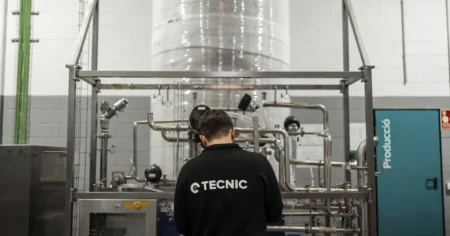
I visited Dave’s plant last March. He walked me to the end of a stamping line where a small camera rig sat over a conveyor. Every part passed underneath. A light flashed. The camera captured an image. Software compared that image to a reference in about 50 milliseconds. If a dimension was off, if a hole was missing, if a surface had a blemish — the part got pushed into a reject bin. No human touched it. No human even saw it. The system caught defects that operators had been missing for months.
Dave told me they found a tooling wear pattern because of that camera. A progressive die was slowly drifting out of spec over weeks. Human inspectors didn’t notice. The machine vision system flagged a gradual dimensional shift on day three. They pulled the die, sharpened it, and saved an entire batch from slowly degrading quality. That’s the kind of story that makes me read machine vision news today. Not the technology. The economics.
What Machine Vision Actually Does in Factories
At its core, machine vision is just automated visual inspection. A camera captures an image. Software analyzes it. Decisions get made. Accept or reject. Measure or flag. Sort or route. The applications are endless. Dimensional checking. Surface defect detection. OCR — reading serial numbers and labels. Color verification. Presence or absence checks. Robot guidance. Barcode reading. Assembly verification.
I saw a system at an electronics manufacturer that checked PCB soldering. The camera looked at each joint, comparing it to a trained reference. Cold solder, insufficient solder, bridges — all caught automatically. A human inspector at the same station caught maybe 85% of defects on a good day. The vision system? 99.5%. And it didn’t get tired at 3 PM.
Then there’s the food industry. I read about a bakery using vision to check bread slice color consistency. If the crust was too dark, the oven temperature got adjusted automatically. No baker had to guess. No customer got an uneven loaf. It’s a tiny thing. But at scale, tiny things matter.
The Technology Is Getting Cheaper Fast
Five years ago, a basic machine vision system cost $15,000 to $30,000. Camera, lighting, lens, software, integration. Today? You can get a capable smart camera with embedded processing for $2,000 to $5,000. Some entry-level systems are under $1,000. The hardware has become commoditized. The real value is in the software and the integration expertise.
I talked to a vision integrator who told me his business shifted dramatically. Three years ago, 60% of his revenue was hardware markup. Today, it’s 20% hardware and 80% software configuration, training, and support. The cameras are cheap. Teaching them what good and bad looks like? That’s the skill.
Deep learning is the big change. Traditional machine vision uses rules. Measure this distance. Check this edge. Compare this contrast. Deep learning uses examples. Show the system 500 images of good parts and 100 images of defects. It figures out the difference itself. It can catch defects you didn’t think to program. But it needs more data, more setup time, and more computational power.
CNC shops use vision for tool wear monitoring and part verification before parts leave the machine.
What I Got Wrong About Machine Vision
I assumed machine vision was only for massive factories. It’s not. Small shops are adopting it for critical inspection points. A 20-person machine shop I visited had a single vision station checking a high-value aerospace part. One camera. One light. One software license. Caught a defect that would have cost them a $50,000 contract. The system paid for itself in one catch.
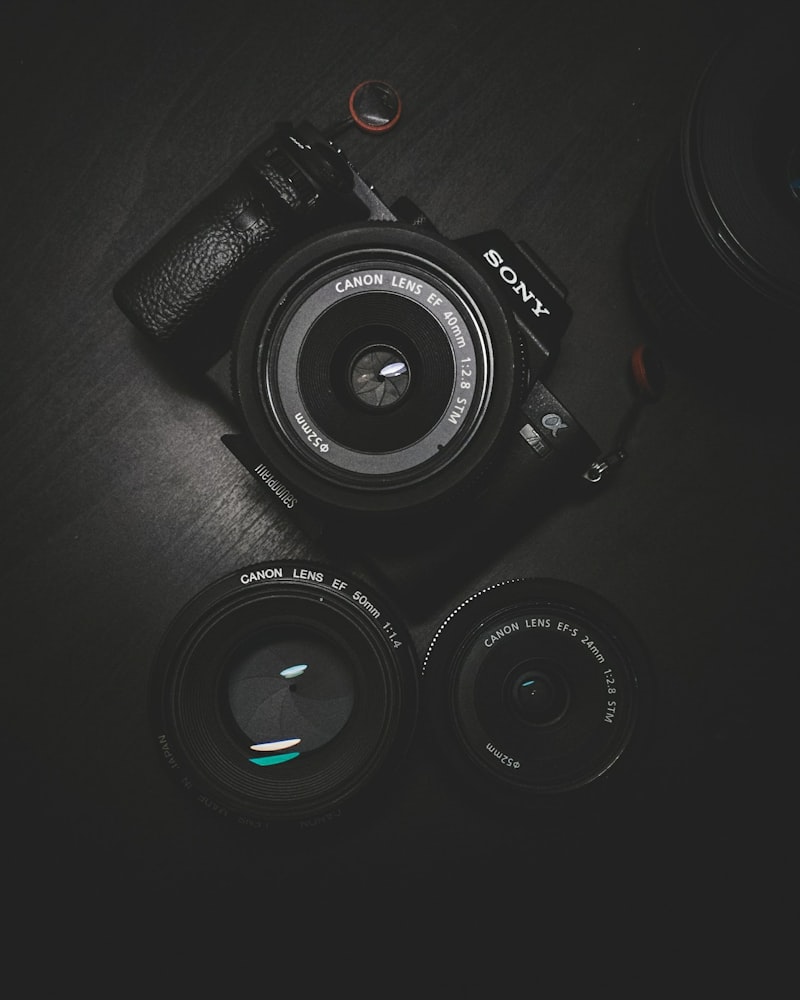
I also thought it was plug-and-play. It isn’t. Lighting is everything. A camera without proper lighting is like a microscope without focus. Angles, intensity, wavelength — they all matter. Change the ambient light in your factory and the system might start rejecting good parts. Environmental control is half the battle.
For background, machine vision basics on Wikipedia explain the fundamentals well. And machine vision market data from Statista shows why this industry is growing so fast.
AR headsets are starting to include vision systems that can overlay defect data directly onto what technicians see.

Frequently Asked Questions
What is machine vision exactly?
It’s automated visual inspection using cameras and software. The system captures images of parts or products, analyzes them against trained references, and makes accept/reject decisions faster and more consistently than human inspectors.
How much does a machine vision system cost?
Entry-level smart cameras start around $1,000 to $2,000. Full systems with dedicated processing, lighting, and integration range from $5,000 to $30,000. Complex deep-learning setups with multiple cameras can exceed $50,000.
Can machine vision replace human inspectors?
For repetitive, well-defined inspection tasks, yes. Machine vision is faster and more consistent. But for complex judgments, unusual defects, or aesthetic quality, humans still outperform cameras. Most factories use vision for routine checks and humans for final verification.
What’s the difference between machine vision and computer vision?
Machine vision is industrial — designed for specific inspection tasks in controlled environments. Computer vision is broader — face recognition, autonomous driving, medical imaging, general image understanding. Machine vision is a subset of computer vision focused on manufacturing quality.
How hard is it to set up a machine vision system?
Hardware is easy. Point a camera, add a light, connect software. The hard part is training — teaching the system what good and bad looks like under your specific conditions. Lighting consistency is critical. A good integrator usually spends more time on lighting design than camera selection.
Where can I find reliable machine vision news today?
I read Vision Systems Design, Quality Magazine, and the AIA machine vision updates. Trade shows like Automate and The Vision Show are great for seeing real systems in action. Reddit’s r/MachineVision has honest practitioner discussions too.
From Skeptic to Believer in Six Weeks
I walked into the Automate show in Detroit expecting to be underwhelmed. I had seen enough slick demos to know that trade floor lighting and perfect parts make every vision system look like magic. What changed my mind was a small booth in the back corner where a vendor let me bring my own part — a scratched, oil-stained bracket from our reject bin — and run it through their camera. The system found the defect in under two seconds. I bought the evaluation kit on the spot.
Six weeks later, we had the first camera mounted above our stamping line. The learning curve was real. Lighting was the biggest surprise. I thought more light was better. It is not. Glare off oily surfaces created false positives that drove us insane for three days until a field engineer showed us how to angle the bar lights at fifteen degrees instead of straight on. The difference was immediate. Our false-positive rate dropped from twelve percent to under one.
That experience taught me that machine vision is not really about cameras. It is about lighting, lenses, and discipline. The camera is just the sensor. The intelligence is in how you prepare the scene. If your parts are moving, you need strobe lighting or a fast shutter. If your parts are reflective, you need polarization filters. If your defects are color-based, you might need a multispectral sensor. None of this is obvious from the brochure.
Getting Started Without Going Broke
Start with a single station and a single defect type. Do not try to inspect everything at once. We began with one camera looking for one flaw — cracks on the north edge of a bracket. Once that was stable, we added a second defect. Then a second station. That incremental approach kept the project funded because we showed value at every step instead of asking for a massive budget upfront.
Budget around $3,000 to $6,000 for a basic monochrome camera, lens, and LED bar set. Software licensing varies, but many vendors offer a thirty-day trial that is fully functional. Use that trial to prove the concept on your worst parts. If it can find defects on your ugliest pieces, it will handle the normal ones easily.
Finally, train at least two people on the software. Vision systems need tuning when products change, lighting shifts, or lenses get dirty. If only one person knows how to adjust thresholds, you will eventually have a very expensive paperweight sitting above your line.
The Lighting Setup That Finally Worked
I spent more on lighting than on the camera itself. That sounds ridiculous until you realize that a $300 camera with perfect illumination outperforms a $3,000 camera under bad lighting every single time. My first setup used two cheap ring lights from a photography store. They created hot spots on curved surfaces and shadows in the inspection zone. I replaced them with a pair of diffuse bar lights mounted at thirty-degree angles and the image quality improved immediately.
For reflective metal, I eventually settled on low-angle lighting — sometimes called dark-field illumination. The light skims across the surface at a shallow angle so that defects like scratches and dents reflect light toward the camera while the surrounding flat surface stays dark. It is the opposite of how you would normally light a subject, and it took me weeks to figure out why it worked so well.
If you are setting up your first vision station, budget thirty percent of your hardware cost for lighting. Buy from an industrial vision supplier, not a photo studio. The color temperature stability and vibration resistance matter more than you think. And always test with your dirtiest, most damaged parts. If your lighting can make a flawed part look clear, it will make a good part look perfect.
The one mistake I see first-time vision users make is chasing perfect accuracy on day one. They spend weeks tweaking the algorithm to catch every possible flaw. What they should do instead is tune for the defects that cause customer complaints and ignore the cosmetic scratches that do not matter. A vision system that catches the critical flaw ninety-five percent of the time is infinitely more valuable than one that catches everything seventy percent of the time. Focus on what costs money, not what hurts pride.
Keep it simple, keep it focused, and you will be surprised how quickly machine vision becomes the most reliable member of your quality team.