
I used to think construction was one of those industries that would never change. Guys in hard hats. Cement trucks. Hammers. That’s just how buildings got made, right? Then I started reading construction automation news. And honestly? I was wrong. Building sites are starting to look like assembly lines. Bricklaying robots. Drones doing site surveys. 3D printers extruding concrete walls. It’s not science fiction anymore. It’s just… Tuesday on a modern job site.
I visited a construction project outside Austin last fall. A robotic arm was laying bricks. Not fast, mind you. About 300 bricks per hour. A skilled mason does 500. But the robot didn’t stop for lunch. Didn’t get tired in 100-degree heat. Didn’t call in sick on Monday. The foreman told me they used it for the boring stretches — long straight walls where precision mattered more than artistry. The human masons handled the corners, the arches, the decorative work. That division made sense to me.
Look, construction automation isn’t about replacing workers. It’s about filling gaps. The industry has a labor shortage that’s been growing for a decade. Young people aren’t entering trades the way they used to. Meanwhile, demand for housing and infrastructure keeps climbing. Something has to give. And increasingly, that something is a machine.
What Construction Automation Actually Looks Like Today
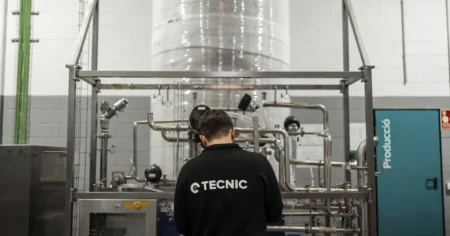
When I picture automation, I picture robots. But in construction, it’s broader than that. Prefabrication is automation. Building wall panels in a factory instead of on-site? That’s automation. Using BIM software to detect clashes before breaking ground? That’s automation. Drones that map a site in hours instead of days? Also automation. The construction automation news I follow isn’t always about robots. It’s about anything that replaces manual, repetitive, or dangerous work with something faster or safer.
I saw a concrete 3D printing demo at a trade show. A gantry system moved back and forth, extruding concrete layer by layer. In 24 hours, it had printed the walls of a 400-square-foot house. The surface was rough. You’d still need finishing trades. But the structure was there. Weatherproof. Straight. Code-compliant. The cost? About $15,000 in material and machine time. Compare that to traditional framing, sheathing, siding, and insulation for the same footprint. The economics are getting interesting.
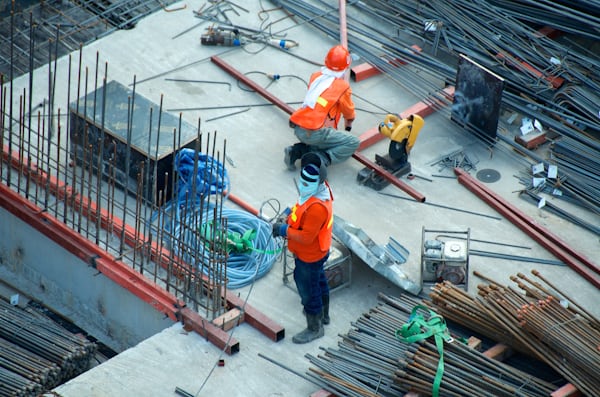
Then there’s rebar tying. Worst job on a construction site, if you ask me. Bending over all day, tying steel with wire, in the sun or the mud. Robots now do that. One I watched moved along a rebar mat on small tracks, finding intersections and tying them with wire in about two seconds each. A human ties one every four to six seconds. The robot isn’t faster. But it works consistently for ten hours straight. And that matters when you’re pouring a foundation on a schedule.
The Economics Are Shifting Faster Than People Think
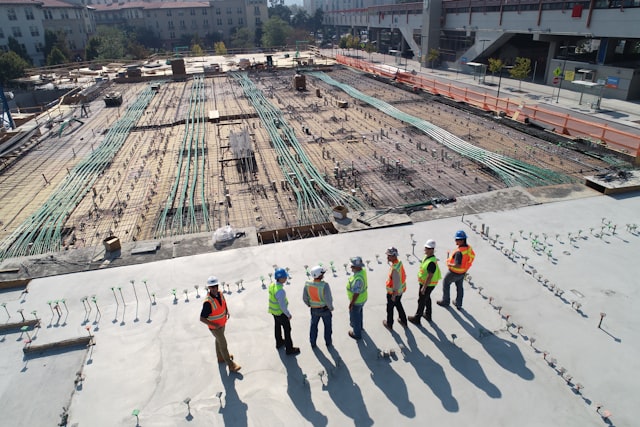
I talked to a general contractor who adopted layout robots. These are small units that autonomously mark where walls, doors, and MEP penetrations go on a concrete slab. Used to take two surveyors most of a day. Now the robot does it in two hours with one person babysitting it. The savings aren’t just labor cost. It’s schedule. Every day saved on layout is a day gained somewhere else. In commercial construction, where delay penalties run thousands per day, that’s real money.
But there’s a catch. Construction sites are messy. Unpredictable. Mud, rain, uneven ground, materials dropped in the wrong place, design changes mid-project. Factory automation works because factories are controlled environments. Construction? Not so much. Every site is different. Every project has surprises. That’s why construction automation has been slower than manufacturing automation. The environment fights back.
I recall reading a McKinsey report that said construction productivity has basically flatlined for 50 years while manufacturing productivity tripled. The difference? Standardization. Factories make the same thing repeatedly. Construction makes something unique every time. Automation loves repetition. Construction hates it. That’s the tension driving most construction automation news right now.
CNC robotics has already solved many of these problems in controlled factory settings, but construction is trying to bring those lessons outdoors.
What Surprised Me Most
I expected construction automation to focus on speed. It doesn’t. It focuses on consistency. A robot doesn’t lay bricks faster than a mason. But it lays them exactly the same way every time. That reduces rework. And rework is construction’s silent profit killer. A study I saw — I think from the Construction Industry Institute — estimated rework costs at 5% to 15% of total project value. If automation cuts that in half, the savings dwarf any labor reduction.
For background, construction industry overview on Wikipedia covers the scale and scope. And construction market data from Statista shows why even small efficiency gains matter at this scale.
Augmented reality is also changing how workers see construction sites, overlaying digital plans onto physical spaces in real time.

Frequently Asked Questions
Will robots replace construction workers?
Not in the near future. Robots handle specific repetitive tasks like bricklaying, rebar tying, and site layout. Complex work — finishing, problem-solving, client interaction — still needs humans. Most automation acts as a tool, not a replacement.
How much does a construction robot cost?
Bricklaying robots run $300,000 to $500,000. Layout robots are $50,000 to $80,000. Concrete 3D printers vary widely — small units at $200,000, large gantry systems over $1 million. Leasing and rental models are becoming common for expensive equipment.
Is 3D-printed housing code-compliant?
In some jurisdictions, yes. Dubai and parts of Texas have approved 3D-printed concrete structures. Approval depends on material testing, structural engineering review, and local building department acceptance. It’s case-by-case right now.
What’s the biggest barrier to construction automation?
Site unpredictability. Factories are controlled. Construction sites aren’t. Mud, weather, design changes, and material variability make automation hard. Robots need consistent conditions, and construction rarely provides them.
Where is construction automation most advanced?
Japan and South Korea lead in robotics. The US and Europe are strong in prefabrication and BIM. China is pushing hard on 3D-printed construction. Each region focuses on different problems based on labor costs and regulatory environments.
Where can I find good construction automation news?
I follow Construction Dive, BuiltWorlds, and the Associated General Contractors of America updates. Trade shows like World of Concrete and Autodesk University also showcase real-world case studies and new product launches.
The Bricklaying Robot That Could Not Handle Mortar
I watched a demonstration of a bricklaying robot at a construction technology summit in Austin. In the controlled showroom, with perfectly mixed mortar and uniform bricks, it laid a ten-foot wall in twenty minutes. The crowd applauded. I was impressed too. Then I asked the vendor what happens when the mortar mix is slightly wet because the batch plant was in a hurry. He changed the subject.
Construction sites are not cleanrooms. Temperature swings affect material viscosity. Dust covers sensors. Wi-Fi drops when the concrete pump is running. The gap between a trade show demo and a Tuesday morning in July is where most construction automation projects die. I have seen three separate robotic layout systems abandoned because they could not handle direct sunlight on the total station prism.
That does not mean automation has no place in construction. It means you have to choose the right battles. Indoor environments with repeatable tasks — drywall finishing, ceiling grid installation, repetitive rebar tying — are far more forgiving than outdoor masonry in variable weather.
What Actually Works on Site
Drones for surveying. A DJI Phantom with photogrammetry software can map a site in an hour what used to take a survey crew a day. The data is not survey-grade without ground control points, but for earthwork volume calculations and progress photos, it is excellent.
Exoskeletons for material handling. I have seen drywall crews use passive back-support exoskeletons that reduce fatigue and injury rates without requiring any power or programming. The technology is low-tech, but the impact is real.
Prefab automation. The real automation in construction is happening off-site. Factories building wall panels, bathroom pods, and MEP racks in controlled environments ship higher quality at lower cost. The site becomes an assembly point, not a manufacturing floor.
If you are evaluating construction automation, ask one question: does this tool make my crew’s existing job easier, or does it add a new job called “robot technician”? If it is the latter, make sure the math supports it.
Weather Is the Enemy of Precision
I watched a robotic rebar-tying system struggle through a morning shift because overnight dew had settled on the steel. The camera could not distinguish wet rebar from the wet ground. The machine tied air half the time. The crew laughed at first. Then they got annoyed because they had to cut the bad ties and redo them by hand. By afternoon the sun had dried everything and the robot performed flawlessly. The lesson was obvious: outdoor construction automation needs environmental controls that factories take for granted.
Wind is another issue. A gust can move a suspended panel by several inches while a robot is trying to align it. Indoor factories do not have sudden forty-mile-per-hour crosswinds. Construction sites do. That is why most successful outdoor robots use physical guides — rails, templates, or fixed jigs — instead of relying purely on vision or GPS.
If you are planning to automate an outdoor task, spend a week just logging environmental conditions. Track wind speed, temperature, humidity, and dust levels by hour. Then ask your vendor how their system performs at the worst readings you recorded. If they hesitate, you have your answer.
Advice for First-Time Buyers
Before you buy any construction automation tool, visit a site where it is already running. Not a showroom. A real building site with mud, noise, and trade crews who have opinions. Watch how the operator interacts with it. Ask what breaks. Ask what the maintenance log looks like. If the vendor refuses to arrange a site visit, that tells you everything you need to know.
Also, negotiate training into the purchase price. Construction crews are smart, but they are not software engineers. A robot that requires Python scripting will sit unused if nobody knows how to program it. Demand on-site training for at least three operators and a written troubleshooting guide in the local language. Those details matter more than the spec sheet.
One last thought: construction automation does not eliminate craftsmanship. It elevates it. The workers who used to spend hours tying rebar or carrying blocks can now focus on alignment, finish quality, and problem-solving. The robot handles the repetition. The human handles the judgment. That is the partnership that will define the next decade of building.
Start small, measure honestly, and scale only what proves itself on the ground. That is the only path that works.
Measure twice, automate once.
Build smart, build slow, and build to last.