

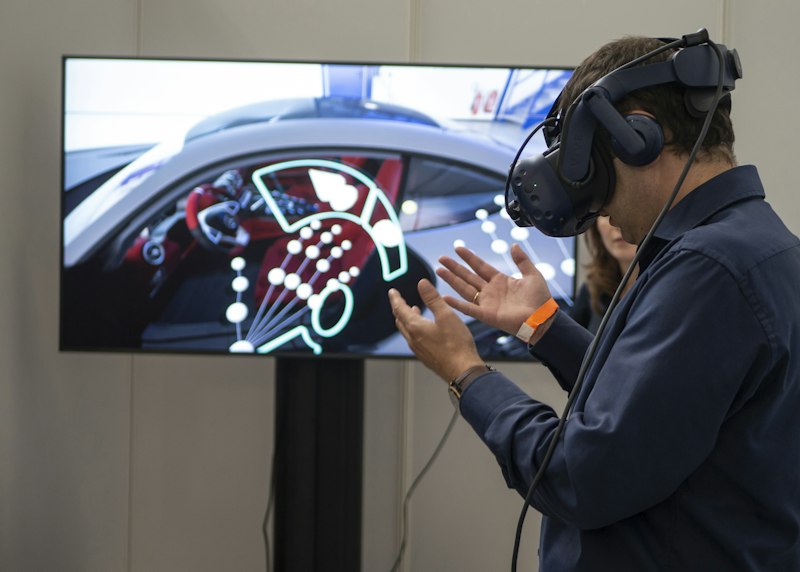
I put on an augmented reality headset for the first time at a trade show three years ago. I saw a floating diagram of an engine hovering over a real machine. Arrows pointed to bolts I needed to tighten. Step-by-step instructions appeared in my peripheral vision. I felt like Tony Stark. Then I took the headset off and went back to my boring smartphone.
But here’s the thing: industrial AR didn’t go away when the hype died down. It just got practical. The consumer stuff — gaming, social media filters — gets all the press. But the industrial applications? Those are where the real money is. And the augmented reality industrial news I read these days is full of actual deployments, not vaporware.
Maintenance Technicians With Superpowers
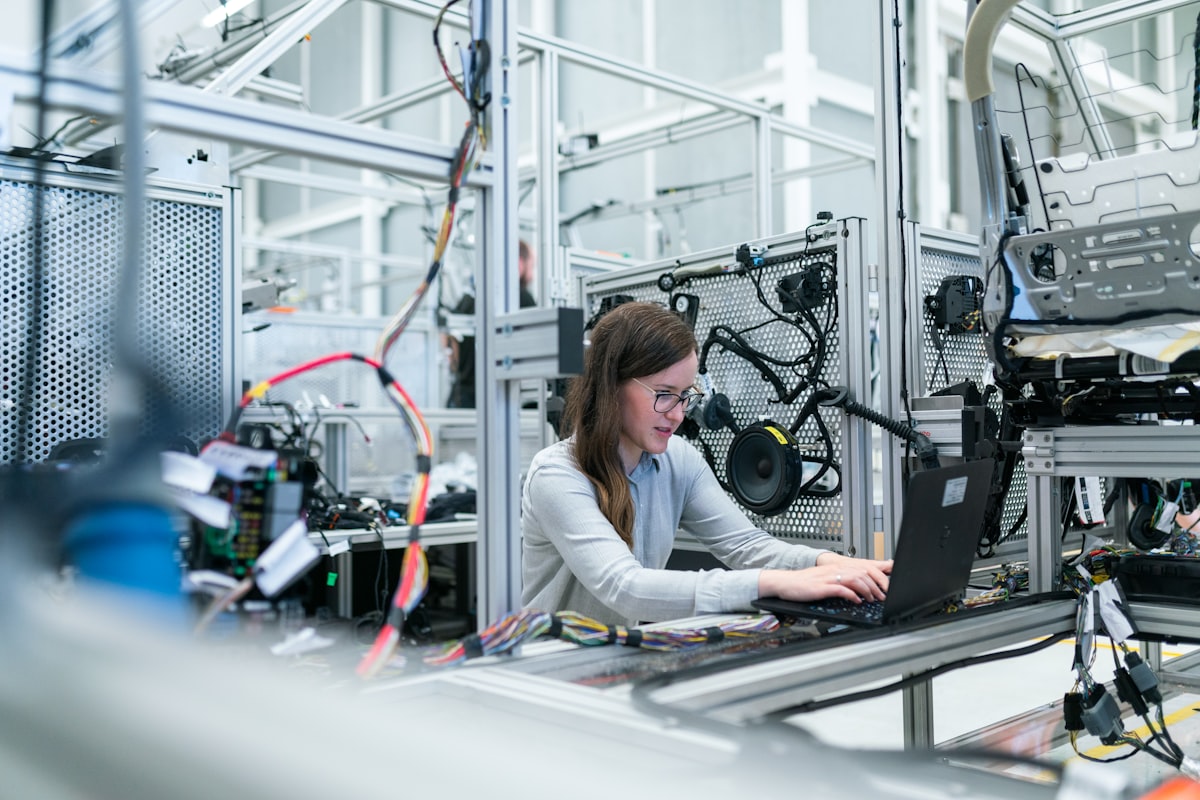
Picture this: a pump breaks down at 2 AM. The on-call technician shows up, puts on safety glasses with a tiny projector, and sees the machine’s schematics floating in front of her. Every bolt labeled. Every wire color-coded. She follows the guided steps, fixes the problem, and goes home.
That’s not a demo. That’s happening at factories right now. Companies like Siemens and Boeing use AR for maintenance because it cuts training time in half and reduces errors. A technician doesn’t need to memorize every manual anymore. They just need to know how to follow directions.
I talked to a maintenance manager who said his team’s average repair time dropped forty percent after they started using AR guidance. Forty percent. That’s not incremental improvement. That’s a different way of working entirely.
Training New Workers Without Wasting Material
Training welders used to mean burning through piles of scrap metal. Trainees would practice on real joints, ruining expensive material until they got the technique right. Not anymore.
Now there’s AR welding training. You hold a real torch, but instead of molten metal, you see a virtual weld bead form on a real workpiece. The system scores your speed, angle, and consistency. You practice until you’re ready for the real thing. Then you weld actual metal — and you get it right the first time.
The augmented reality industrial news I’ve seen says training programs using AR cut material costs by up to seventy percent. And trainees reach competency faster. One company told me their welding program went from twelve weeks to eight. That’s a month of salary saved per person.
Designing Factories Before Pouring Concrete
Building a new production line is expensive. Moving equipment after it’s installed? Even more expensive. That’s why companies are using AR to visualize layouts before committing.
You walk through an empty factory floor wearing a headset. Virtual machines appear where you’re thinking of placing them. You see if there’s enough clearance for maintenance access. You check sight lines for safety. You realize the conveyor would block an emergency exit before you spend a dime on installation.
A plant engineer told me they caught three major layout problems during AR visualization that would have cost over a hundred thousand dollars to fix after installation. The AR software cost them about five thousand. That’s math even I can do.
digital twins in manufacturing are closely related, and AR is becoming the window through which people interact with them.

Remote Experts Who Don’t Need to Fly
Before AR, when a complex machine broke at a remote facility, the company flew in an expert. Plane ticket. Hotel. Per diem. Days of downtime waiting for arrival. Now they just call.
The local technician puts on AR glasses. The expert, sitting at home in another state, sees exactly what the technician sees. They can draw arrows, circle components, and talk the local person through the repair in real time. It’s like having the expert standing next to them, except they’re actually in their pajamas.
One company told me they eliminated over two hundred business trips in a single year after deploying AR remote support. The savings on travel alone paid for the entire program. And the machines got fixed faster because there was no waiting for flights.
remote maintenance technology trends are moving fast, and AR is the clearest winner so far.
For background, Wikipedia’s augmented reality overview covers the technology basics well. And industrial AR market projections from Statista show this segment growing faster than consumer AR by a wide margin.
Frequently Asked Questions
What is industrial AR exactly?
It’s augmented reality technology used in manufacturing, maintenance, and design contexts. Instead of Pokémon on your phone, you see schematics, instructions, and data overlays while working on real equipment.
Do AR headsets work in noisy, dirty factories?
Better than you’d think. Industrial AR glasses are built tougher than consumer models. Dust-resistant housings. Noise-canceling audio. Safety-rated lenses. They’re not invincible, but they survive conditions that would kill a regular VR headset in minutes.
How much does industrial AR cost?
Entry-level industrial AR glasses start around two thousand dollars. Enterprise platforms with remote collaboration features run five to fifteen thousand per unit. Software subscriptions add another few hundred per month. It’s not cheap, but the ROI on training and maintenance makes it pencil out quickly.
Is AR hard to learn for older workers?
Actually, older workers often benefit most. The guidance overlays tell them exactly what to do, reducing the need to memorize procedures. I’ve heard from trainers that workers over fifty adapt faster than expected because the technology removes ambiguity.
Where can I find good augmented reality industrial news?
I follow ARPost, Manufacturing Tomorrow, and the blogs from companies like PTC, Microsoft HoloLens, and Magic Leap. The best sources publish case studies with real numbers, not just product launches. If there’s no ROI mentioned, it’s probably marketing fluff.
