

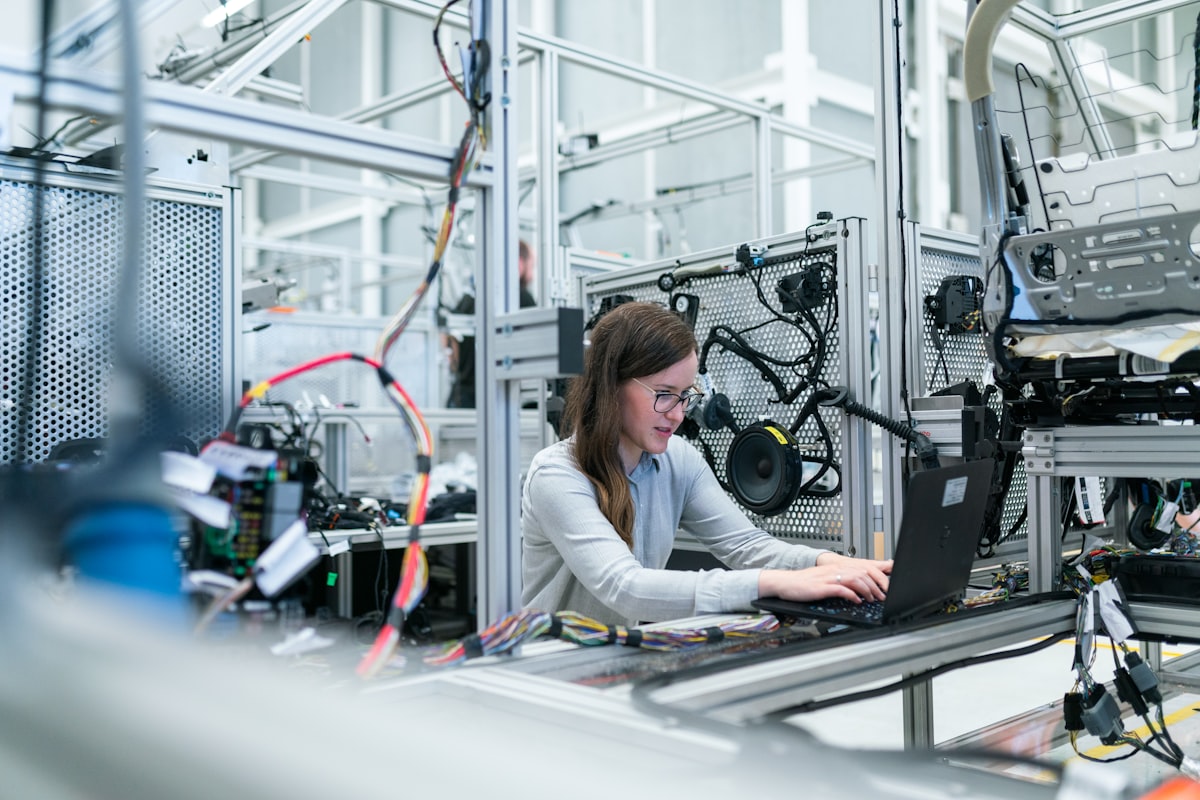
I walked into a factory last year and saw a guy holding what looked like an oversized tablet. He was tapping buttons, dragging sliders, and occasionally yelling at a machine that had stopped moving. That tablet was running a ctrl robot interface. I didn’t know that’s what it was called at the time. I just thought he was playing an expensive video game.
Turns out, control robots — or more accurately, robot control systems — are the brains behind almost every automated factory floor. Without them, those giant arms everyone films for TikTok would just be expensive sculptures. The ctrl robot layer is what translates human decisions into machine actions. And honestly, it’s way more interesting than the robots themselves.
What Ctrl Robot Actually Means in Practice
The term gets thrown around in a few ways. Sometimes it means the handheld controller an operator uses to jog a robot into position. Sometimes it means the software layer that coordinates multiple robots at once. And sometimes it means the PLC logic that decides whether a safety gate is closed before anything starts moving.
I asked a controls engineer to explain it to me like I was five. He said: imagine the robot is a body. The motors are the muscles. The sensors are the eyes. The ctrl robot system is the nervous system — it takes what the eyes see, decides what the body should do, and tells the muscles when to move. Without it, nothing talks to anything.
That analogy stuck with me because it makes the boring stuff feel alive. And the boring stuff is where the money is. A robot arm might cost thirty thousand dollars. The control system that makes it useful? That’s where the real investment goes.
The Handheld Controller Nobody Talks About
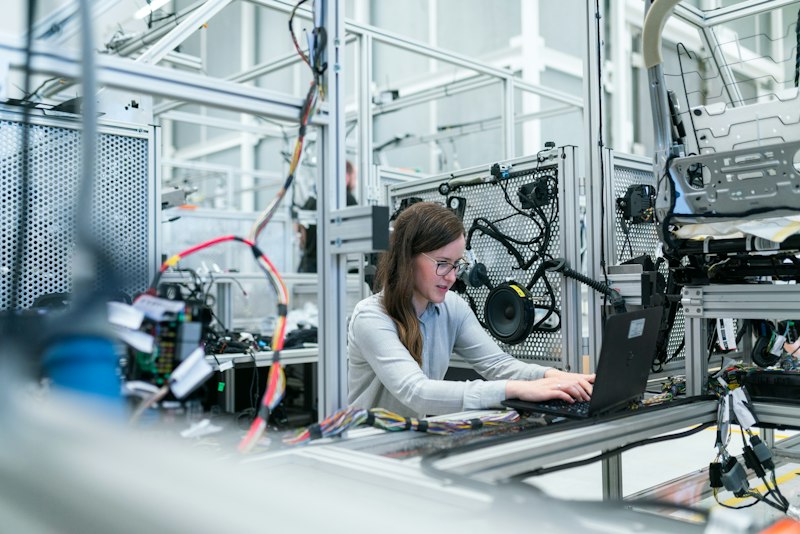
Everyone wants to see the autonomous robot. The one that just… does things. But in reality, most robots spend a lot of their lives being manually controlled. Setup. Calibration. Teaching positions. Debugging. That’s where the ctrl robot handheld comes in.
I held one. It was heavier than I expected. Lots of dead-man switches — buttons you have to hold down constantly or everything stops. That sounds annoying but it’s actually genius. The second the operator panics or drops the controller, everything halts. No runaway robots. No crushed fingers.
The screen showed a 3D model of the robot arm. You could rotate it, zoom in, see exactly where each joint was. Then you could nudge the arm millimeter by millimeter until it was in exactly the right spot. The operator told me he’s been doing this for twelve years and still finds it satisfying. “Like surgery,” he said. “But for machines.”
Programming the Robot Without Knowing Code
Here’s what surprised me most. The operators don’t write code. Not really. Modern ctrl robot systems use teach pendants with graphical interfaces. You move the arm where you want it. You save that position. You string positions together into a sequence. Add some wait commands. Some sensor checks. And you’ve got a program.
It’s more like directing a play than writing software. “Go here. Pick that up. Move there. Put it down. If the sensor sees nothing, stop and complain.” The actual code gets generated behind the scenes. The operator never sees it. And honestly, that’s probably for the best. Most of these guys came up through trades, not computer science programs.
AI reshaping factory floors is a topic I’ve covered before, but control systems are the unsung layer that makes all that AI actually do something physical.
Safety Systems That Actually Save Lives
The ctrl robot layer isn’t just about movement. It’s about stopping movement. Every modern system has multiple safety loops. Light curtains. Pressure mats. E-stop buttons. Door interlocks. And they all feed into the control logic.
I watched a demo where someone stepped through a light curtain. The robot didn’t just stop. It stopped in a controlled way — decelerating smoothly rather than slamming to a halt. That’s the difference between a cheap system and a good one. Cheap systems panic. Good systems think.
The operator told me a story about a guy at his old plant who bypassed a safety gate because he was in a hurry. Lost two fingers. The control system wasn’t the problem — the human was. But modern ctrl robot systems are getting smarter about detecting human stupidity too. Not foolproof, but better than they used to be.
industrial automation safety standards are something every manufacturer should review, not just the big players.
For the technical foundation, Wikipedia’s robot software overview covers the programming side well. And latest industrial robot market data from Statista shows control system spending growing faster than hardware — which tells you where the industry thinks the value is.
Frequently Asked Questions
What does ctrl robot mean exactly?
It refers to the control systems that operate industrial robots — everything from handheld teach pendants to software that coordinates multiple machines. It’s the brain that tells the robot what to do, when to do it, and when to stop.
Do I need programming skills to operate a ctrl robot system?
Not anymore. Modern systems use graphical interfaces. You teach positions by moving the arm and saving locations. The system generates the code automatically. That said, understanding the logic helps when things go wrong. And things always go wrong eventually.
How much does a ctrl robot system cost?
Entry-level handheld controllers start around two thousand dollars. Full control software for a multi-robot cell can run fifty thousand or more. But it’s usually bundled with the robot purchase. The real cost is training — getting operators who actually know how to use the thing properly.
Can ctrl robot systems work with older machines?
Sometimes. Retrofitting old equipment with modern controls is a whole industry. It depends on the machine’s age, the available interfaces, and whether anyone still makes parts for it. I’ve seen twenty-year-old robots running modern controllers through adapter modules. It wasn’t pretty, but it worked.
What’s the future of ctrl robot technology?
Cloud-connected control systems. Remote monitoring. Predictive maintenance alerts. The robot tells you its own joints are wearing out before they fail. That’s already happening at the high end. In five years it’ll be standard. The days of reactive maintenance — fixing things after they break — are ending.
